Tuesday, June 26, 2012

C.S.I. Irwin

Rooting out Criminals in the Vegetable Patch

Despite my faithful effort in the weeding and watering departments, our vegetable garden looks sad. Plants are being haphazardly pruned overnight.  Leaves are sheared off.  Tomatoes are topped.  The shoemaker’s elves must be throwing bonsai parties in the garden each night.  Too bad there is nothing make-believe about this damage.

Zapped Zucchini


Suspect number one: rabbits.  My handsome fence-builder shot into action on Mother's Day and constructed a wire fence to keep those long-eared veggie snitchers out. 

The damage continued. 
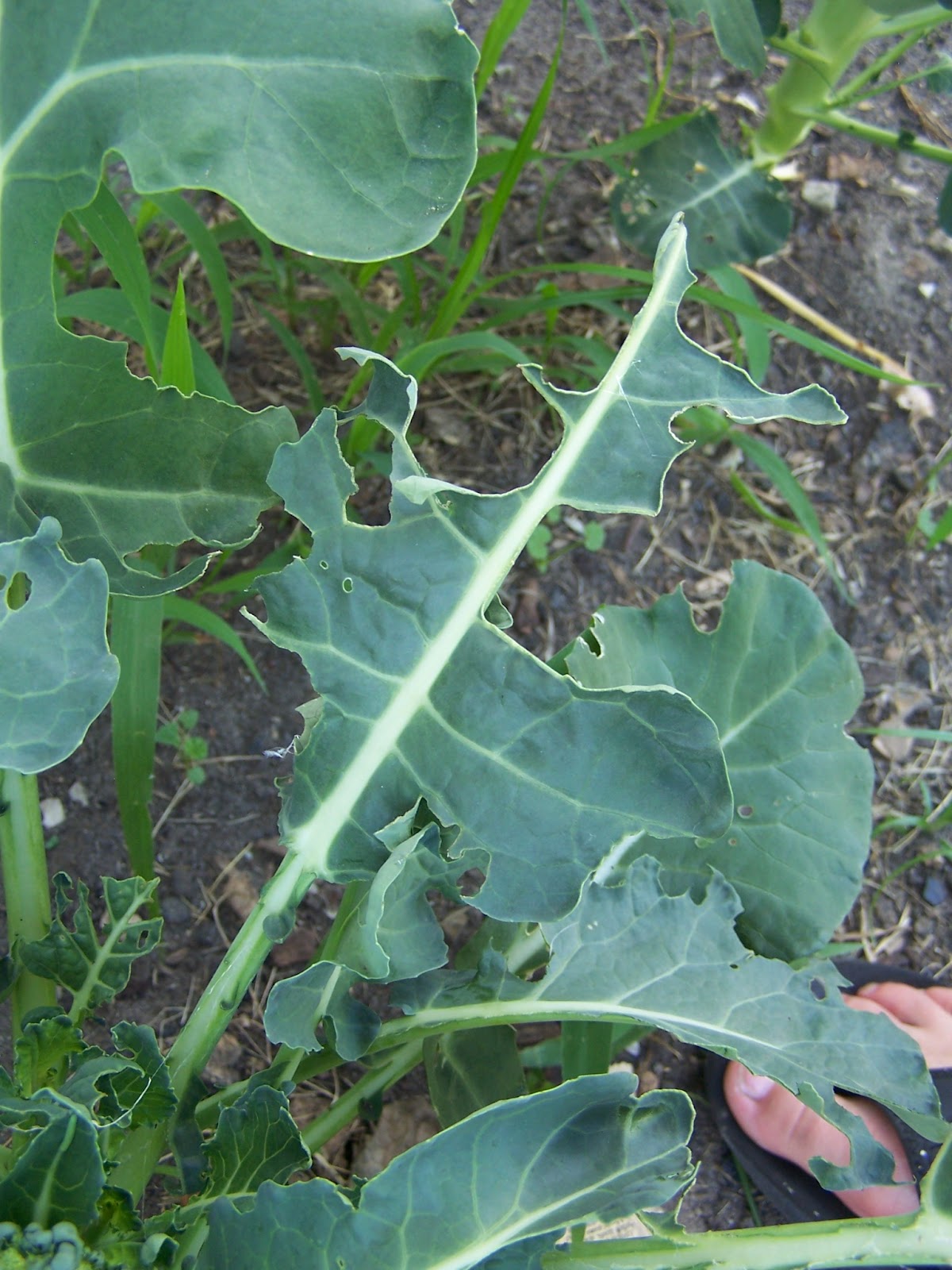
Bullied Broccoli
Picked-on Peppers
Time for a pitty party.  I’m a procrastinator, after all, and it’s hard for people like me <sniff sniff>  to work extensively without reward.   This was so unfair <insert whining tones>.   I was doing everything right this year.  I'd even planted marigolds between the tomatoes.  Their happy yellow blooms were the first to go. 

Now, hold on just one blessed minute.  The first to go?  What on earth?  Marigolds (in the form of Pyrethrum) are the active ingredient in a handful of insecticides.  What creature in its right mind would eat a marigold?  I pulled out my trusty Ortho Home Gardener’s Problem Solver and searched for Tagetes (Marigold’s latin nomer).  Lo and behold, there were two bugs listed that would eat that insecticidal plant.  Since this clearly wasn’t the work of spider mites, the culprit had to be a cutworm. 

Cutworms are the beavers of the insect world.  Envision a caterpillar with big buck teeth, chomping down every plant in your garden.  In reality, they don’t have big white bicuspids, but that mental imagery helps me identify their damage: buzz-sawn vegetables.  The cutworm is a fleshy caterpillar, about 2” long, which spends its days hiding in the top 2 inches of your soil.  Then, when you’ve retired for the night - when you’ve kicked off your boots and settled down in your Lazy-Boy with the latest edition of the Daily Journal - out they come.  Slinking up and down stems, lopping off a limb here, and a leaf there.   

What this lousy worm didn’t realize is that he just picked a fight with the Terminator.  I’m the girl wielding a Rambo knife.  The procrastinator righteously indignant over her ineffectual effort.  The glutton who lives for every bite of fresh garden salsa she can squeeze out of the season.  He has foolishly tread into enemy territory. 


My fruitless effort: one massacred marigold,
upturned soil and empty bug jar.
Armed with bitterness and a trowel, I set out one night on a seek and destroy mission.  The plan: to dig up the top 2” depth of my entire garden, locate every cutworm, and eradicate their species from the face of the planet (beginning, obviously, with my vegetable patch).  Twenty minutes later, I’d have been glad to find one.  Not a single cutworm had risen to the challenge.  Cutworms were proving to be more clever than anticipated.   Time to up my game.  I would return later - much later - under the cover of darkness.

I’m not excessively scared of the dark (aside from the increased possibility of tripping and falling to my death), but the setting of the sun introduces a new challenge that lurks in our vicinity: Mephitis mephitis, commonly known as the striped skunk.  They’re not as populace as rabbits, but a run-in with one is certainly more potent.  After tucking my children in bed, I faced my stinky fears and plunged into the night. 

Fifty-two brave steps later, I was safely locked into my wire-fenced vegetable garden.  I turned the flashlight toward the recently damaged peppers and marigolds.  Clever or not, those cutworms had to eat.  No amount of camouflage or cleverness could save them from me now.  With the intensity of a surgeon, I examined each plant.  Up and down the stems, under the leaves, around the perimeter of the plants.   Nothing.  Not a one.  What was I doing wrong? 

As I gathered my thoughts, the beam of my light rested on a broccoli stem.  A sliver of copper colored material caught my attention.  A closer inspection revealed four earwigs enjoying an extended one-course meal on the thick leaves.  The broccoli foliage looked as if it’d been perforated by a mad hole-puncher.  Could earwigs have done all the damage to my garden?  I turned to the source of ultimate knowledge: Google. 

Within minutes, my hunch was confirmed and I was in the kitchen mixing up a concoction of sweet stickiness to trap the pincher-bottomed bugs.  One more trip back into the night and the skunk-infested countryside, and three little pots of revenge were set.  Eight hours later, dawn revealed my success: 110 earwigs floating in sticky goo.  The next night I set out one sticky trap and three damp, rolled newspapers (another recommended organic trap).  108 earwigs in the goo and 0 in the papers.  I'll be setting out traps until they come back empty.  Case closed. 

My apologies to the rabbits and the cutworm.  You're off my hit list.  For now. 

Mini-Terminator in the making,
mixing up Earwig traps.

The earwig trap was composed of equal parts corn syrup, vegetable oil and soy sauce, mixed in little margarine tubs and buried up to the soil level for easy bug access.  It also effectively caught 12 spiders, 1 beetle, 2 moths, and countless ants.  Something to keep in mind for other buggy dilemmas.  

Tuesday, June 19, 2012

Planting Pickets

White picket fences.  Quaint, quintessential Americana.  Perhaps for this reason, my heart lodged on the concept of having one wrap around our yard.  So, Mr. Tall Dark and Handsome constructed one for me (don’t worry, folks, I’m married to him).  Little did I know, that white picket fences are for the birds.  Literally.  What I thought we were building was a stylish boundary for my dog and a structure for vining plants.  What we actually built was a roost for cardinals, chickadees and mourning doves.  They made themselves right at home, and a comfortable bird poops.  A lot.  And so my lovely fence is perpetually in need of paint.  White fences that are longer than 100’ require a full-time painting crew.  By the time you’ve worked your magic on one end, the bird world has defaced the other.  It’s certain the pickets would look better if I removed the bird feeder, but believe it or not, we'd miss those little poopers.

Inspired by Tom Sawyer, I included "Paint the Fence" in a challenge I issue to the kids each summer.  There are yummy AND fun prizes, so I figured it would be a win/win situation for everyone involved.  The few attempts that were made resulted in several spottily painted pickets and extra brushes for me to clean (#46723 on my list of fun things to do).  Mark Twain made this seem so much simpler.

One solution for a splotchy fence is to apply some horticultural camouflage to it.  Some girls have a shoe fetish.  I have a vine fetish, and it comes in handy with my bird doo-doo dilemma.  Their twiny, tropical nature transfixes my mind.  At Sunrise Nursery this spring, I fought the urge to clear out the inventory in their vine aisle.  Currently, our fence is enveloped in Sweet Autumn Clematis, Pink Lemonade Honeysuckle, an unidentified Climbing Rose and Green beans.  But I’ve got plans for expansion.  Here’s a few on my wish list:

Akebia foliage
Five-Leaf Akebia (Akebia quinata) is a home-run vine.  I love the lacy visual texture of the compound leaves but the piece de resistance are the burgundy-lilac flowers, which hang in clusters with dramatically reflexed petals, emitting a fragrance of…..Hersheys.  Mmmm.  Chocolate flowers?  Don’t mind if I do.  As if that wasn’t enough to sell this climber, the seed pods contain a sweet, edible pulp that tastes like tapioca pudding.  I have yet to sample the pulp personally, but I am a fan of tapioca.  I made an entire batch disappear in the process of writing last week’s column.  So yes, I will have an Akebia.  It’s just a matter of time.  

Arctic Beauty Kiwi (Actinidia kolomikta) is the perfect compliment to my lackadaisical painting.  The leaves are tipped in white and pink, giving the impression they’ve been dipped in a bucket of paint.  So if I do paint, no one will notice if I get some on the leaves.  And if I procrastinate painting, it will look as if I at least tried recently, since the leaves are freshly decorated.  But this plant has more to offer than colorful foliage.  Dr. Skirvin, one of my favorite Illini professors, introduced me to the fruit of the Hardy Kiwi vine.  No peeling fuzzy skin off of these: just pop ‘em in your mouth.  Delicious!  The plants do require a male and female plant to produce fruit, so I’ll be sure to get both when the requisite garden space opens up. 

Clematis beauty
I feel a bit sheepish about putting Clematis on my list.  What self-respecting Illinois horticulturist does not already have Clematis in their garden?  This one.  I'm not talking about the Sweet autumn Clematis which is already rambling prolifically here, but the ever popular, large-flowering type.  The big dilemma is which variety to plant first.  Jackmanii is overused, but seeing it in bloom melts away all my objections.  Who cares if every Tom, Dick and Harry has one?  I want one too!  Those luscious blooms transplant my mind to a distant tropical island (complete with a fruity drink and the aforementioned fence-builder).  Whatever hybrid I choose, I plan on interplanting it with another species of vine.  Clematis are slow starters: with the exception of Sweet Autumn, they need several years to develop a 'presence'.  Additionally, they're a one season performer and they like their roots shaded and their blooms in the sun.  Interplanting would answer all of those issues very nicely. 

These are just the top three of my vine wish list.  Climbing Hydrangea, Passionflower, Dutchman’s Pipe Vine, Trumpet Creeper and Wisteria are all in my gardening future.  Hopefully, Mr. Tall Dark and Handsome is taking notes for his 2013 Mother's Day shopping list.  

Tuesday, June 12, 2012

Asparagus Aplenty


My stovetop has been covered by a steady precipitation of salt, pepper and parmesan for the past month.  I’ve wiped it down, believe me, but the mess just keeps coming back.  The forecast for tomorrow: another seasoning snowstorm.  The offending sloppy sprinkler is yours truly and I have two problems:  
1.  I can't seem to sprinkle seasonings in a tidy pattern (I'm a messy painter, too.)
2.  I've developed a taste for fried asparagus. 

I have memories of creamed asparagus on toast as a child, but until recently, my adult culinary skills were pretty limited in that department.  So I ate it raw.  Until this year.  I bought myself a garlic press and now I’m cooking EVERYTHING with olive oil and garlic.  Asparagus, as it turns out, tastes pretty great fried with garlic and sloppily sprinkled with salt, pepper and parmesan.   

Compounding my kitchen cleaning conundrum is the fact that I live next door to the King and Queen of Asparagus.  If you're acquainted with Dan and Denise Lowe, then you've probably eaten their asparagus.  By day, Dan's a diesel mechanic, but he moonlights as an asparagusologist (word of my own creation).  And this is one serious hobby: Dan planted 2000 Jersey Knight plants in a field north of Irwin.  He’s been eating ditchweed since he was a wee rabble rouser, picking it along the roadsides.  Back then, he just boiled his wild treasure.  But these days he eats it (courtesy of Denise) grilled, fried, baked, steamed, in soups, omelets and casseroles.  His favorite recipe is asparagus fried in butter with diced ham and cheese.  His very supportive sweetie has picked 350 gallons of asparagus this year.  Seventy gallons have been put up in their freezer and the rest has been given away (hence my messy stovetop). 

Dan and Denise's field started out as nine trenches, 250 feet long and 10" deep.  The asparagus starts were planted in the trenches and as they grew, Dan buried them, bit by bit, until they reached the top of the trench.  Then he mounded soil over the plants.  At that point, the waiting began: the Lowes allowed the field to grow unhindered for three years before they began harvesting.  This practice enhances the size of the root ball and encourages the development of lateral growing points.  A mature, well-maintained plant can grow to the size of a bushel basket.

Dan’s field of asparagus is NOT politically correct.  No girls allowed.  Well, no girl asparagus plants, anyway.  Reason being that introducing both male and female plants opens the door for baby asparagus plants everywhere.  By limiting the selection, he keeps nice, clean rows.  Easier for picking and maintaining.  Speaking of maintaining, asparagus has an unusual requirement.  It needs salt, which explains why it grows so well in ditches.  Right around the last snowfall of the year (or in a snow sparse year: March) Dan covers his asparagus bed with water softener salt.  It should be covered enough to appear as if there has been a light snowfall.  

When your ditchweed is prime for picking, follow these guidelines:
1.  Cut the stalk below the soil.  It will regenerate more quickly.
2.  Don’t cut anything less than 4 inches tall or thinner than the diameter of a pencil.
3.  Don’t wait too long to cut it.  Asparagus gets tough in a hurry.  Dan and Denise pick twice a day in the peak of the season. 
4.  Pick until the middle of June.  Then it’s time to let it go to seed.  This allows the plant to build up sugar reserves for next year’s crop.

Yes, yes, I know it’s the second week of June.  I haven’t given you much time to cover your stovetop with salt, pepper and parmesan.  But there's still enough asparagus around to get you started and then you'll be all revved up for zucchini season.  


Related Posts Plugin for WordPress, Blogger...